
Technology from banks has made a lot of bookkeeping tasks easier, however those who work with financial records understand that it’s not perfect. Clients continue to send PDF statements, bank feeds might not be working and historical transactions aren’t available. If that happens, someone must convert a document specifically designed for reading data into a format that accounting software actually utilize.
A converter for bank statements can take away a significant portion of the repetitive work that is involved in this process. Docubrew converts bank statement information into spreadsheet-ready information, rather than manually entering dates, descriptions withdrawals, and deposits row by line.
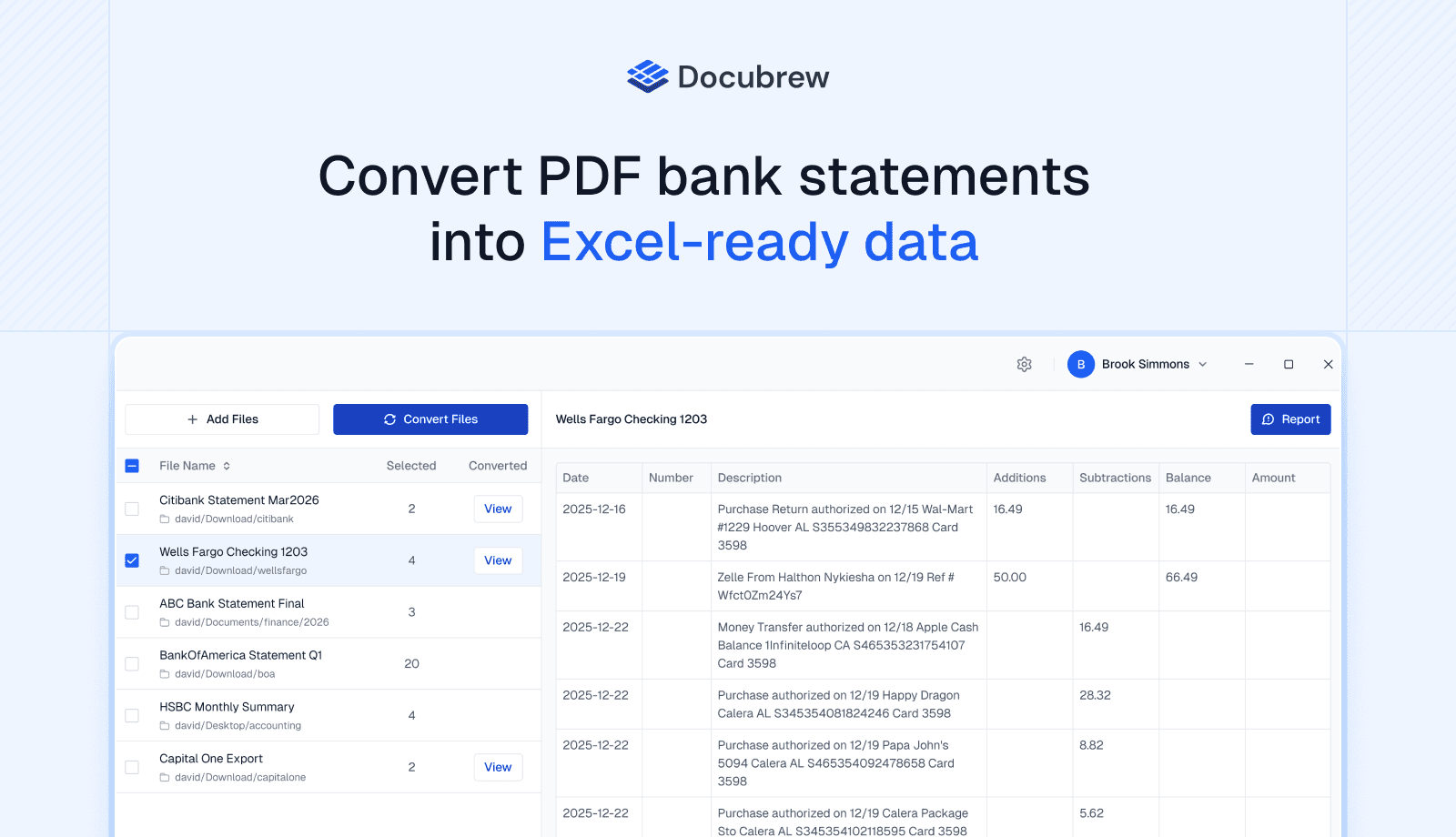
Image credit: docubrew.com
When a pdf becomes the missing piece
Imagine a bookkeeper making an annual reconciliation for an unnamed client. The accounting platform includes recent transactions, but several older years aren’t included. The client downloaded original statements in PDF format.
Typically, rewriting the previous months can take hours of copying figures into the spreadsheet. A PDF bank statement to Excel workflow provides a more practical alternative. Docubrew can extract information about transactions from digital PDFs and scan bank statements printed on paper.
The reduction of manual transcription is a great way to reduce the possibility of making mistakes for professionals who need to transfer bank accounts to Excel regularly.
Make sure you keep the pages that matter
Bank statements do not consist only of transactions. A 12-page report could include a summary of the account, disclosures and notices along with several pages describing the actual banking transactions.
Docubrew allows users to preview the document and select the appropriate pages prior to conversion. This makes it easier to convert bank statement data to Excel without the need to add irrelevant content.
After the file is processed, it can be opened in Excel or integrated into accounting platforms such as QuickBooks, Xero, FreshBooks, etc.
CSV allows for a variety of accounting workflow
CSV remains valuable because it is widely used by spreadsheets, databases and accounting applications. Docubrew will transform your bank statement into CSV by using the transaction tables contained within the report.
The same workflow can be used to transform bank statements into CSV for a variety of reasons, including rewriting the past, starting the task of cleaning up unutilized client data, looking into any missing transactions or creating the data for reconciliation.
Accounting firms who need to work with many clients or statements can make batch processing extremely useful.
The financial documents you use should be protected by careful privacy controls
It’s not the only thing to think about when it comes to processing financial records. Accounting and bookkeeping professionals may be concerned about the processing location because bank statements contain confidential client information.
Docubrew has two alternatives. Windows desktop software processes files stored on the computer of the user. These statements cannot be uploaded to be transformed. The encrypted cloud version is available for users who prefer working from browsers. Uploads are removed automatically after 24 hours.
This distinction is what differentiates Excel software, which relies solely on remote processing from the platform for bank statements.
Turning Document Archives Back Into Working Data
The PDF statement is a great document, however it’s a pain if you need to reconcile, sort, filter, or import transactions from another. Scanned files create an additional issue, as the transaction details are typically only available in images.
Docubrew is an effective application that combines OCR and statement parsing to turn the documents that were scanned into useful financial information. This provides accountants, bookkeepers, and business owners a way to convert financial records that are archival into valuable transactional data.
This simple remedy can help speed up an inefficient workflow by preserving the original bank statement while changing its transaction table into the information you need to use.